The Episcopal Church Welcomes You!
The best way to learn about the Episcopal Church and Old North is to spend time with us. The Old North Congregation would be honored to welcome you into our community as we live into our calling as the Body of Christ. We strive to be a House of Prayer for All People. Learn more about our beliefs, and feel free to join us for worship.
History
The Episcopal Church traces its origins through the long history of Christianity in the British Isles. Rooted especially in the Church of England’s Reformation-era traditions, it maintains the Anglican liturgical and doctrinal heritage, while adapting to its contexts in the United States and in 21 other countries in which it maintains dioceses and parishes.
Old North (formally Christ Church) was established in 1723 as the second Church of England parish in Boston. In northern colonies, especially New England, Anglican clergy were overwhelmingly Loyalist. During the American Revolution most clergy fled to England or Nova Scotia, including our rector, along with many members of the congregation. In middle and southern colonies Anglican churches tended to be more supportive of the Revolution.
Because membership in the Church of England was no longer possible following the Revolution, Anglican parishes formed local dioceses and in 1789 established the Protestant Episcopal Church in the United States, maintaining most practices of the Church of England, including the three-fold ministry of bishops, priests, and deacons, while adapting the Book of Common Prayer to local needs. Old North was a founding congregation of the Diocese of Massachusetts and the Episcopal Church.
The name “Episcopal” means “with bishops;” although, ministry is undertaken by all baptized members. Among the defining characteristics of the autonomous Episcopal Church was the adoption of democratic governance (including representation and voting rights for the laity) alongside its maintenance of the historic office of bishops. Candidates for bishop were elected locally and eventually ordained in Scotland and England, thereby establishing a new American branch of Anglicanism.
What’s Shaped Us
The Episcopal Church has been shaped by societal currents, including the abolition of slavery, Social Gospel movement, biblical criticism, civil rights, and inclusion of women and LGBTQ+ persons in leadership. Ecumenical and interfaith engagement have deepened relationships with other faith traditions, including full communion with Lutheran and Moravian churches.
Eleven U.S. presidents have been Episcopalian, among them George Washington, James Madison, James Monroe, Franklin Roosevelt, Gerald Ford, and George H. W. Bush. Several Supreme Court justices also have been Episcopalian, including Thurgood Marshall and Sandra Day O’Connor.
Episcopal Church history is far from perfect. It includes decisions that we today would find profoundly un-Christian, such as the embrace of slavery and destruction of Native American peoples and cultures. The same is true in Old North’s own history, especially its early embrace of slavery. The Episcopal Church has lamented these sins and seeks to make amends as we strive to embrace the humanity of all people more fully and faithfully today.
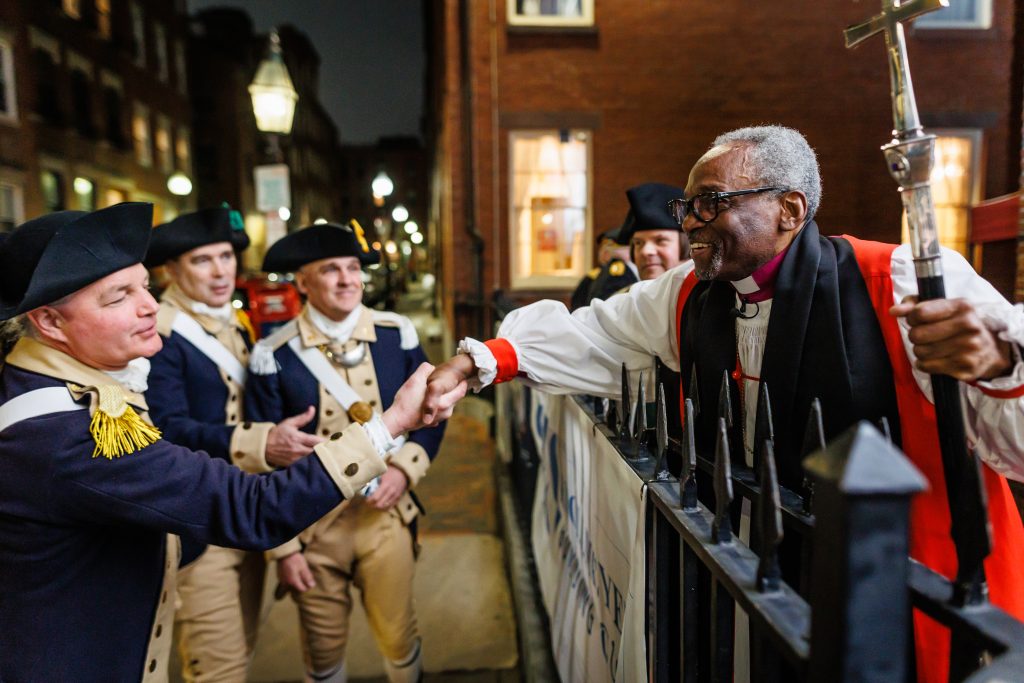
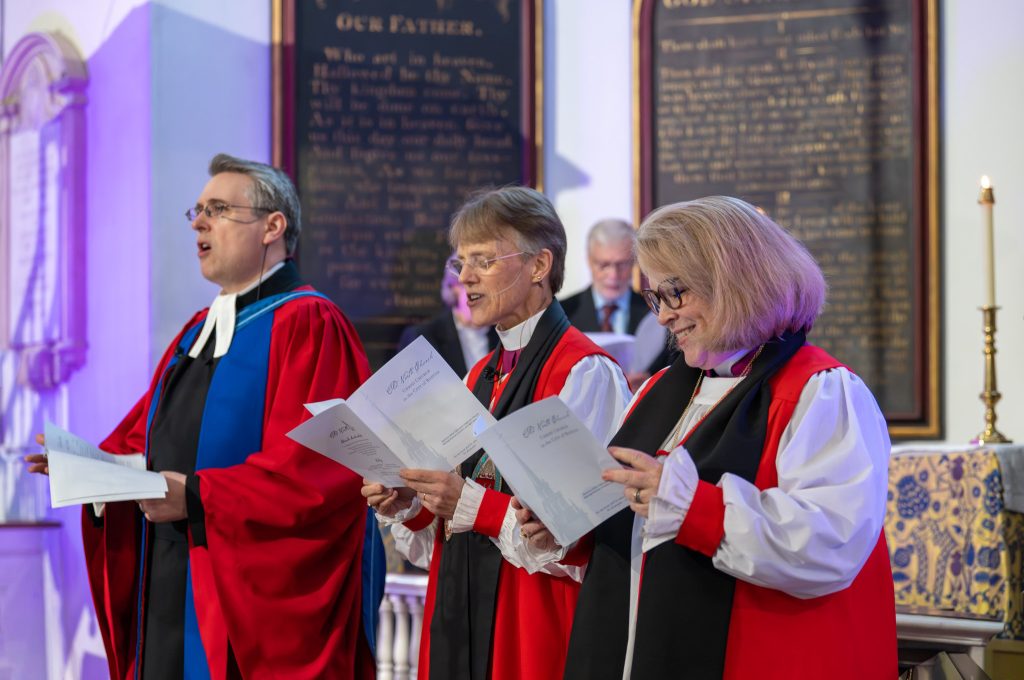
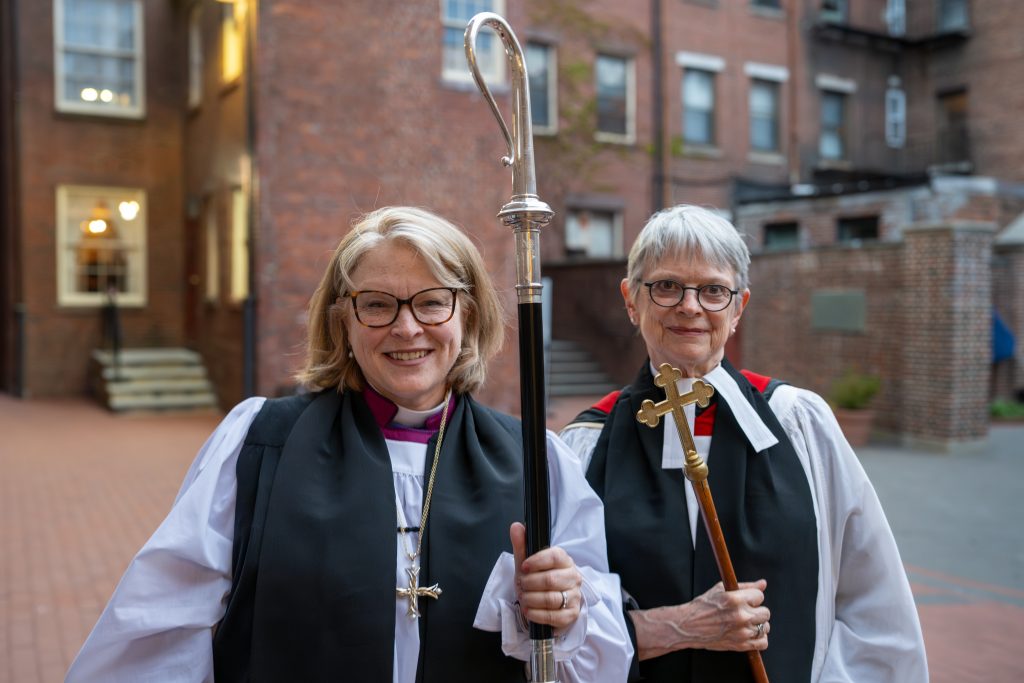
Momentous developments in Episcopal Church history include the election of John Burgess as bishop of Massachusetts in 1970, the first African American to lead a diocese. The first ordinations of women as deacons were held in 1970 and as priests in 1974. The first woman consecrated bishop was Barbara Harris in 1989, also in Massachusetts. Gene Robinson, the first openly gay bishop, was consecrated in 2003. The first woman was elected as Presiding Bishop of the Episcopal Church was Katherine Jefferts Schori in 2006, followed by Michael Curry, the first African American Presiding Bishop, in 2015 (pictured above). Julia E. Whitworth was elected as the Bishop of Massachusetts in 2024, the first woman to lead our diocese (pictured below left, with the Rev. Deacon Daphne Noyes, right).
Learn More About the Episcopal Church & the Anglican Communion
Get to Know Us and Join Us for Worship